
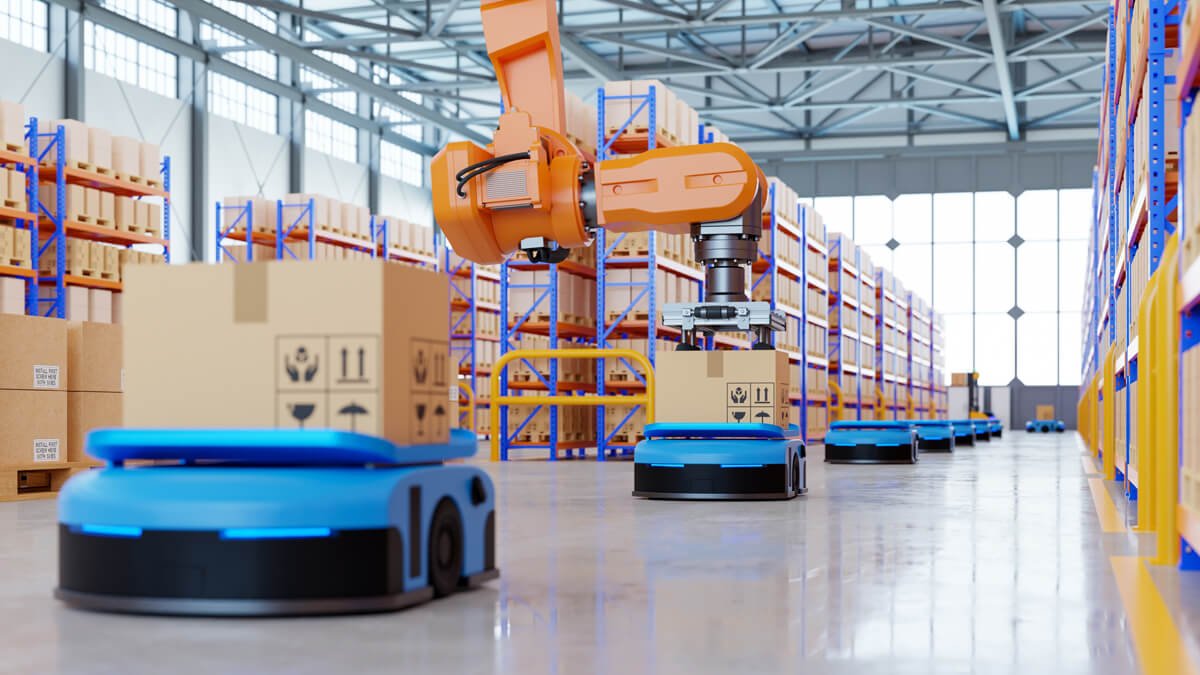
The quietest shift in American operations is not happening in boardrooms. It is happening in aisles, corridors, docks, pharmacies, and supply rooms where people keep moving even when the system feels stretched thin. Mobile robot navigation is turning that pressure into a practical answer, because these machines can carry totes, samples, linens, meals, and parts without needing a fixed track in the floor. The point is not to replace every worker. The point is to remove the walking, waiting, and backtracking that eat up a day.
For warehouse managers, hospital operations teams, and facility planners, the question has changed. It is no longer, “Can a robot move by itself?” It is, “Can it move safely when the building is crowded, messy, and short on time?” That is where the real value sits. Smart routing, sensors, traffic rules, and software links matter more than the shiny body of the machine. For teams comparing automation options, business technology visibility can help them think past the product brochure and ask better questions before money is spent.
Why Mobile Robot Navigation Is Moving From Demo Floors to Daily Work
Robots used to look most impressive when they performed in a clean demo space. A smooth floor, perfect lighting, and no rushed worker with a hand truck. That kind of scene makes for a neat video, but it tells you little about daily work. The useful test is messier: a warehouse during a carrier cutoff, or a hospital hallway while a nurse is pushing a cart and a visitor is asking for directions. NIST has active work around performance metrics and test methods for autonomous mobile robots, which points to the same truth: the field needs measured behavior, not hype.
The route problem nobody sees
A person walking through a warehouse makes dozens of tiny choices without naming them. Step around the pallet. Slow near the blind corner. Wait for the forklift. Take the wider aisle because the narrow one has a loose stretch-wrap tail on the floor. A robot has to turn those quiet choices into mapped rules, sensor readings, and motion plans.
That is why the navigation layer matters so much. A good machine does not only know where it is. It knows how fast it should move near people, when to pause, when to reroute, and when to ask for help. The non-obvious part is that the “smartest” route is often not the fastest line on a map. It is the path that stays boring under pressure.
Think about a fulfillment center outside Dallas during a Monday return spike. The receiving dock is crowded, the packing area is short one person, and the tote flow keeps changing. A robot that saves thirty seconds on one trip but blocks a picker for two minutes has failed the building. The best system protects the whole rhythm, not one machine’s travel time.
How autonomous warehouse robots fit beside people
Autonomous warehouse robots earn trust when workers can predict them. That sounds less flashy than machine learning, but it matters more on the floor. A picker should be able to tell, after a few shifts, how the robot behaves at an aisle crossing or where it waits near a pack station. Predictability lowers friction.
The strongest warehouse deployments often start with plain jobs: moving goods from receiving to put-away, taking picked totes to packing, or hauling empty containers back to a staging area. None of that sounds dramatic. That is the point. Repeated trips are where labor hours disappear, and repeated trips are also where robots can prove themselves without turning the whole site upside down.
A mild surprise for many buyers is that autonomous warehouse robots can reveal process problems the team has learned to tolerate. Maybe returns are staged in the wrong spot. Maybe an aisle is treated as storage during peak hours. Maybe the best robot path exposes a bad human workflow. The machine is not only carrying inventory. It is showing where the building has been lying to itself.
What Makes the Warehouse Use Case Different
Warehouses look friendly to automation because they have maps, labels, docks, racks, and repeatable tasks. That is true, but it can make leaders careless. A warehouse is controlled compared with a street, yet it is still full of motion. People cut corners. Pallets land in temporary places. Seasonal workers may not know the traffic habits. A robot has to share that space without adding a new kind of confusion.
The best path is not always the shortest one
Shortest-path thinking belongs on paper. On a live floor, the best path may be longer because it avoids a heavy picking zone or stays away from forklift traffic. It may also change by hour. A route that works at 10 a.m. may be poor at 4 p.m. when outbound staging fills up and supervisors start making quick calls.
This is where site setup matters. The map is not a one-time file. It becomes a working agreement between the robot fleet and the people around it. Speed zones, no-go areas, charging points, drop-off rules, and handoff locations all shape how well the system behaves. A buyer who treats the map as an afterthought will pay for that mistake later.
Here is the counterintuitive piece: too much freedom can hurt. If the robot can go anywhere, it may choose paths that make sense to software but feel strange to workers. A tighter set of approved travel lanes can make the whole building calmer. Less freedom, better flow.
AMR safety systems turn traffic rules into floor behavior
AMR safety systems are not a sticker on the spec sheet. They are the difference between a robot that “detects obstacles” and a robot that behaves well near humans. Sensors, braking logic, alarms, light signals, and fleet rules all have to work together. OSHA notes that robotics hazards need careful recognition and evaluation, and it also states there is no single OSHA standard written only for the robotics industry. That puts more weight on site-level risk review.
A warehouse manager in New Jersey might set a robot speed limit near manual packing benches, use one-way travel near pallet wrap stations, and create a hard stop rule near a crosswalk by the dock. None of that looks fancy. It looks like good floor management. That is exactly why it works.
The hidden risk is social, not technical. If workers feel the robots are dropped into the building without explanation, they will route around them, block them, or ignore warnings. If they are trained early and asked where near-misses happen, they often become the best source of safety fixes. The floor already knows where the awkward corners are.
Why Hospitals Are Harder Than They Look
Hospitals seem like a natural fit because so much time is spent moving items from one place to another. Medication, lab samples, meals, clean linen, sterile supplies, and waste all travel inside the building. Yet hospitals are harder than warehouses because the mission is different. A warehouse protects throughput. A hospital protects care.
Hospital delivery robots work in a building that never pauses
Hospital delivery robots are often asked to take over tasks that pull staff away from patients. Research on AMRs in hospital logistics has focused on material handling services and how they may help hospital personnel spend more time on care rather than transport work. That is the promise. The hard part is that a hospital never becomes a robot-only space.
A hallway can change in seconds. A patient bed may come through. A family may stop near a doorway. A nurse may need the same elevator. A robot carrying lab samples cannot act like a warehouse cart that owns its aisle. It has to be polite, slow at the right times, and clear about what it is doing.
The best use cases are often humble. Pharmacy to unit. Lab pickup. Linen delivery at set times. Meal cart support. These jobs do not make a hospital look futuristic. They make the day less wasteful. That is more valuable.
Elevators, doors, and nurses change the whole math
A hospital robot does not only navigate hallways. It has to deal with elevators, badge-controlled doors, crowded nurse stations, infection-control rules, and time-sensitive requests. One blocked elevator can wreck a route that looked perfect in planning. A supply closet placed ten feet from a busy patient room can create daily friction.
That is why hospital projects should start with workflow mapping before purchase orders. Watch a medication run. Time a lab sample pickup. Note where staff wait, where carts gather, and where a delivery interrupts care. A route that seems short on a floor plan may be poor because it crosses the wrong doorway at the wrong hour.
Hospital delivery robots also need a different kind of acceptance. In a warehouse, the worker may care most about speed and space. In a hospital, staff care about trust. Will the robot arrive when expected? Will it keep items secure? Will it stay out of the way during an urgent moment? Good answers to those questions matter more than a polished demo.
How American Buyers Should Judge a Deployment
Buying robots is easier than changing a building around them. That is where many projects stumble. Leaders fall in love with the machine and delay the dull planning that decides whether it will pay off. The smarter path is slower at the start: pick the right route, define the handoff, train the people, and measure the work before and after.
Start with one boring route, not the hardest job
The best first route should be frequent, measurable, and low drama. In a warehouse, that might be tote movement from picking to packing. In a hospital, it might be scheduled linen transport between central supply and a patient floor. The route should happen often enough to create data, but not carry so much risk that every small failure becomes a crisis.
This is a strong place to connect a robotics plan with warehouse automation planning guide and hospital operations technology checklist. Leaders need a way to compare the robot route against staffing patterns, floor layout, task timing, and safety rules. The machine is only one part of the decision.
A useful pilot asks blunt questions. How many trips did the robot finish? How often did staff intervene? Where did it pause? Which doors, elevators, or corners caused trouble? Did the route reduce walking time, or did it move the delay somewhere else? A clean answer beats a large promise.
When integration matters more than the robot
Integration is where a good robot program grows up. The machine may need to connect with a warehouse management system, elevator controls, automatic doors, badge access, charging schedules, dispatch software, and maintenance logs. Each link removes manual babysitting. Each weak link creates another place for delay.
AMR safety systems also need review after the pilot, not only before launch. The first month will show patterns that planning missed. Maybe workers gather near a charging dock during shift change. Maybe a robot’s warning sound blends into other alarms. Maybe a delivery point is too close to a door swing. These are fixable problems, but only if someone is watching.
The non-obvious buying advice is simple: ask vendors how the system fails. Ask what happens when Wi-Fi drops, a door stays closed, an elevator is full, a cart blocks the lane, or a staff member removes an item from the wrong drawer. The answer will tell you more than a highlight reel. Real automation is not the absence of problems. It is a calm plan for handling them.
Conclusion
The next phase of robotics in American facilities will be less theatrical and more useful. Warehouses and hospitals do not need machines that impress visitors for five minutes. They need machines that make a long shift less wasteful, safer to manage, and easier to repeat tomorrow. That is why mobile robot navigation deserves attention from operations leaders, not only technology teams.
The real winners will be the sites that treat robots as part of a working system. They will map routes with employees, set clear safety rules, start with plain tasks, and measure what changes after the launch. They will also resist the temptation to automate chaos. A bad process with a robot attached is still a bad process.
If you are planning a deployment, begin with one route that matters, one team that will use it, and one set of numbers you can defend. Build from there. Quiet wins last longer.
Frequently Asked Questions
How do autonomous mobile robots know where to go inside a warehouse?
They use maps, sensors, cameras, lidar, and software rules to understand their location and choose safe paths. The robot compares what it sees with its stored map, then adjusts when people, pallets, carts, or blocked aisles change the route.
Are autonomous warehouse robots safe around human workers?
They can be safe when the site is planned well, workers are trained, and speed limits, warning signals, and traffic rules are set. Safety depends on the whole setup, not only the robot’s sensors or the vendor’s claims.
What jobs can robots handle in a hospital?
They often move medications, lab samples, linens, meals, sterile supplies, and other materials between departments. The best tasks are repeated often, have clear pickup and drop-off points, and do not require clinical judgment.
Do hospital robots replace nurses or support staff?
They are mainly used to reduce transport work, not replace clinical care. A nurse still makes decisions, checks patients, gives medication, and responds to emergencies. The robot handles trips that can pull people away from patient-facing work.
What should a business check before buying AMRs?
Start with the route, not the robot. Check floor layout, task volume, worker movement, Wi-Fi coverage, charging space, safety rules, maintenance support, and software links. A weak process will not improve because a machine is added.
How long does an AMR pilot usually need?
A useful pilot should run long enough to include normal rush periods, staffing changes, blocked paths, and maintenance checks. A few polished demo days are not enough. The site needs real shift data before judging value.
What makes hospital AMR projects harder than warehouse projects?
Hospitals have patients, visitors, elevators, secure doors, urgent care moments, and infection-control concerns. The building changes constantly. A robot must be safe, predictable, quiet, and trusted by staff who already work under pressure.
What is the biggest mistake companies make with AMR deployment?
They buy the robot before fixing the workflow. The better move is to study routes, remove obvious bottlenecks, train workers early, and define success in plain numbers. The machine should support a clear operating plan, not hide a messy one.