
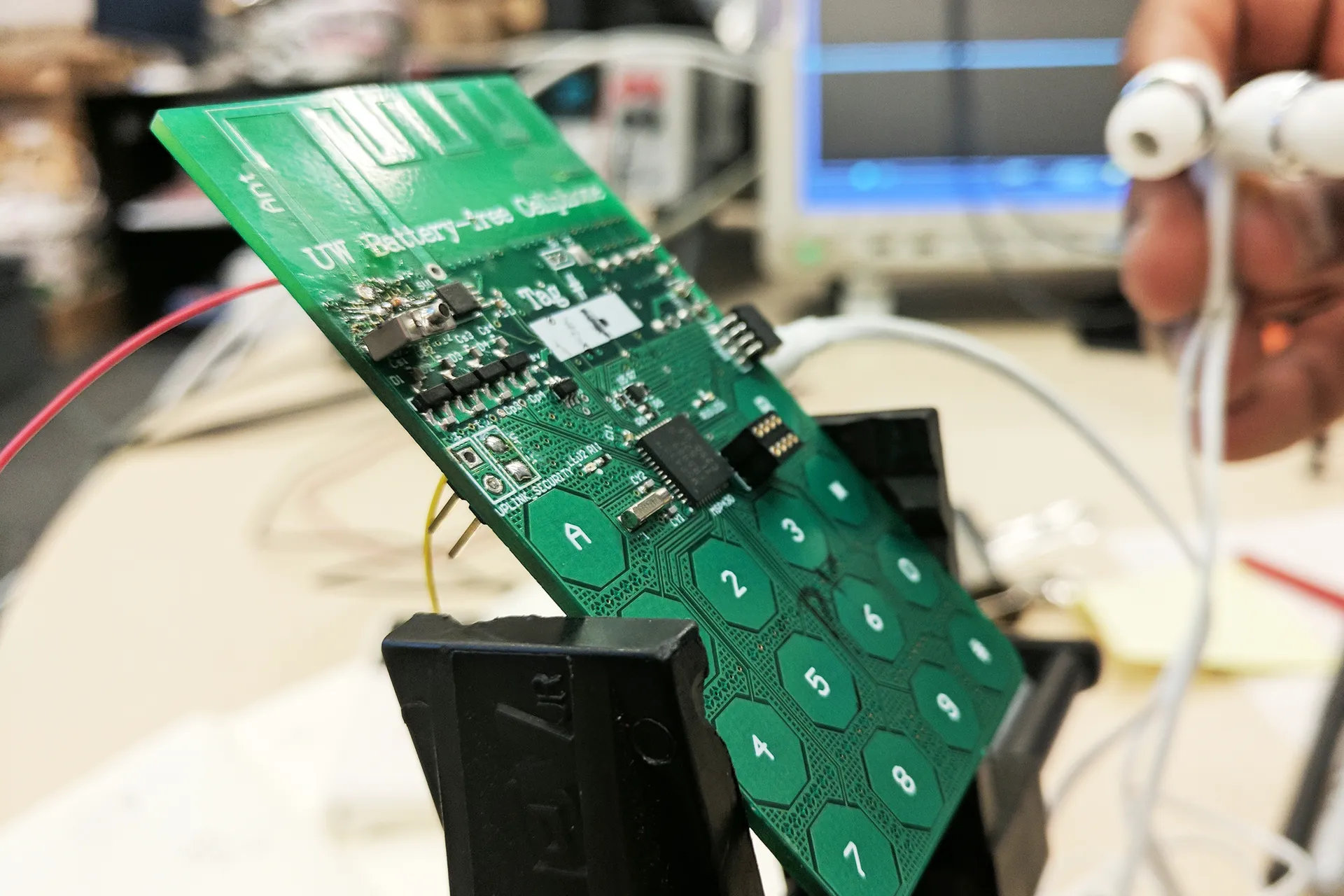
The next wave of connected hardware may not look like a shiny gadget at all. It may look like a price tag, a shipping label, a wall patch, or a tiny sensor tucked behind a refrigerator case. Ambient Backscatter Communication turns nearby radio signals into both a power source and a message path, which is why engineers see it as a serious route toward battery free wireless devices. Instead of sending a fresh radio signal like a phone or router, a tag changes how it reflects signals already in the air, such as TV, Wi-Fi, or cellular energy. That simple shift matters for U.S. retailers, farms, hospitals, warehouses, and homes where changing batteries across thousands of nodes would be a maintenance headache. For teams tracking the next layer of connected hardware, technology news and digital PR coverage can help frame why low power ideas are moving from lab talk into business planning. The promise is not magic, though. It is a trade: tiny data, short range, careful placement, and a need for smarter readers. The win comes when those limits fit the job.
Why Battery Free Wireless Devices Are Becoming a Real Hardware Bet
Small sensors used to be easy to admire and hard to live with. A company could place them on pallets, pipes, doors, bins, or retail shelves, then spend the next few years chasing dead batteries. The ugly cost was not always the cell itself. It was the truck roll, the ladder, the missed reading, and the staff time needed to find a quiet failure before it became a business problem.
A national chain can absorb the price of a sensor order. What it hates is sending people back into the same stores for small fixes that do not create sales. That is why the battery question is not a small hardware detail. It is a labor problem, a planning problem, and sometimes a safety problem.
The maintenance cost hiding inside every small battery
Ask a warehouse manager what hurts more: buying a sensor or keeping it alive. The answer often depends on location. A sensor on a loading dock door is simple. A sensor inside a freezer, above a ceiling tile, or under a bridge joint is a different story. That is where battery free wireless devices begin to make sense, even when their data rate is modest.
The counterintuitive part is that weaker hardware can be the better product. A tag that sends only an ID, a temperature state, or a moisture alert may beat a richer wireless node because nobody needs to touch it for years. The best sensor is sometimes the one boring enough to disappear.
A grocery chain is a clean example. A powered camera can watch a cooler. A full wireless sensor can report every detail. Yet a thin tag that wakes from nearby RF energy and reports a simple threshold could serve the one question the store cares about: did this case drift out of range? The answer does not need a large packet. It needs to arrive before the milk spoils.
That same logic applies in rental housing. A property group may own hundreds of apartments across Phoenix, Tampa, or Columbus. A leak sensor that sits under a sink and reports only a wet condition can save drywall, flooring, and tenant complaints. The device does not need a bright screen. It needs to be cheap enough to place in every unit.
Why reflection can beat transmission in tight places
Normal radios spend most of their energy shouting. Backscatter tags whisper by changing their reflection. That is a smaller act, and it changes the design math. The tag does not have to create a carrier wave. It can harvest energy, switch impedance states, and let the reader do much of the hard work. Recent survey work on battery-free IoT points to the same reason backscatter keeps drawing attention: removing power-hungry active RF transmission can drop the energy burden sharply.
This is why RF energy harvesting keeps coming up in the same breath as passive sensing. The tag may pull tiny amounts of power from the radio field around it, store enough to run a small circuit, then send a bit pattern by altering how it reflects the signal. That sounds delicate because it is. But delicate is not the same as useless.
Think of a smart building in Dallas with hundreds of leak points near water heaters, restrooms, and roof drains. You do not need every sensor to stream data. You need a low-cost signal that says dry, wet, or failing. In that setting, low power IoT sensors can act like quiet guards. They do not win by being loud. They win by being placed everywhere a full radio node would be too costly to maintain.
The better comparison is not a phone against a tag. It is a working tag against no sensor at all. Many businesses leave blind spots unmonitored because powered hardware turns the budget ugly. A small reflection-based device can fill those gaps, even if it never competes with Wi-Fi on speed.
How Ambient Backscatter Communication Moves Data Without a Normal Radio
The core idea is simple enough to explain at a kitchen table, but hard enough to engineer well. A tag listens to the radio world around it and changes how its antenna reflects that energy. The receiver sees tiny changes in the reflected signal and turns them back into data. Early University of Washington work showed small battery-free devices exchanging data by reflecting existing TV signals, which helped push the field from theory toward working prototypes.
How a tag talks by changing what it reflects
A backscatter tag has a few basic parts: an antenna, a small circuit, a way to harvest or store energy, and a switch that changes the electrical load on the antenna. When the load changes, the reflection changes. Those changes can stand for ones and zeroes. It is radio communication, but stripped down to its bones.
That stripped-down design is the appeal. Less power spent on active transmission can mean smaller parts, lighter packaging, and new shapes. A label on a parcel, a wrist patch in a hospital, or a soil sensor in a California almond orchard does not need to act like a phone. It needs to answer a narrow question at the right moment.
There is a catch. The surrounding signal was not created for the tag. Wi-Fi traffic rises and falls. Cellular conditions shift. Metal racks, glass doors, water, and human bodies bend the path. A design that works well on a lab bench can stumble in a packed store aisle at 5 p.m. Good systems plan for that mess instead of pretending it does not exist.
This is also why demos can mislead buyers. A tabletop demo may show a tag blinking from harvested energy. A real site asks harder questions. Where are the dead corners? What happens during a power outage? Does the tag still answer when a cart blocks the reader? The physics are the start, not the full product.
Why the reader matters more than the tag
Most people stare at the tag because it is the new object. The reader is often the real hero. It supplies clean timing, better antennas, sharper signal processing, and sometimes a known signal source. A weak tag can become useful when the receiver is smart enough to pull meaning out of a faint reflection.
This is where buyers should slow down. A battery-free tag is not a drop-in copy of a Wi-Fi sensor. It is part of a system. Placement, reader density, local RF noise, software filtering, and data rules all shape the result. The tag may cost pennies in a future volume plan, but a poor reader layout can waste the savings.
A U.S. hospital is a useful test case. Asset tags on wheelchairs, pumps, or trays do not need constant video-grade tracking. They need presence, movement, and location hints. A reader grid placed near supply rooms and hallway choke points may offer enough detail without forcing staff to charge devices. That is less glamorous than a live map. It may also be closer to what the hospital will pay for.
The reader also becomes the place where trust is built. If a tag misses three reads, the dashboard should explain whether the problem is placement, interference, damage, or low harvested energy. Buyers will accept limits. They get nervous when the system acts mysterious.
Where U.S. Companies Could Place Low Power IoT Sensors First
A new wireless method usually fails when it chases every market at once. This one should not start with jobs that demand high speed, long range, or rich data. It should start where a tiny message has high value and where battery work is painful. That narrows the field in a helpful way.
The strongest early markets will likely share one trait: the environment is partly controlled. A store, warehouse, clinic, truck dock, or processing plant gives engineers known walls, known routes, and known reader locations. Open fields and public streets can come later. First, prove the math indoors.
Retail, logistics, and cold-chain tracking
Retail shelves are a natural early target because the environment is controlled and the business case is easy to explain. A tag can help report whether a product moved, whether a shelf space is empty, or whether a cooler door stayed open too long. None of those events need a large stream of data.
Logistics offers a second path. A shipping label with a tiny sensor could record simple state changes across a route. Did the package get too warm? Was it opened? Did it pass a reader at a dock door in New Jersey or Southern California? The value is not in tracking every second. It is in catching the moment that changes liability, freshness, or trust.
Cold-chain use is especially interesting because batteries dislike harsh conditions. Freezers and refrigerated trucks punish weak cells, and staff do not want to open cases to service electronics. RF energy harvesting will not solve every cold-chain problem, but it can reduce the number of powered nodes needed for simple checks. The quiet insight here is that the best first use may be a hybrid setup: powered gateways plus small passive tags, not a pure battery-free world.
That hybrid approach also helps with accountability. A powered gateway can keep time, location, and network records, while the tiny tag reports the state. In food, medicine, and high-value shipments, that split may be easier to explain to insurers and customers than a fully passive chain with missing context.
Homes, farms, and city assets
Homes may adopt this through boring products first. A leak tag under a sink. A door state marker in a garage. A humidity sensor behind a washing machine. Nobody wants another charger for those jobs. Nobody wants another app that screams for attention either. A tiny device that reports only when something changes may feel more natural.
Farms have a different need. Soil moisture, gate state, bin temperature, and equipment presence all matter, but rural RF conditions vary. A tag near a powered reader on a pump station may work. A tag far across an open field may not. That means early farm deployments should cluster around known assets before spreading across acreage.
City assets add another layer. Parking signs, water meters, trash bins, and bridge sensors all sound tempting. The problem is not only range. It is weather, vandalism, public RF noise, and public procurement. A city will ask who maintains the readers, who owns the data, and what happens when a tag fails. The answer must be plain. For buyers, smart sensor deployment planning should come before a pilot order, not after.
The most practical city pilot may be small and dull: a few maintenance yards, a controlled garage, or a group of public coolers in a health department program. That kind of pilot will not make a flashy headline, but it can teach the team how tags behave before the city puts them on street assets.
What Still Blocks Battery Free Wireless Devices From Mass Rollout
The hard part is no longer proving that reflection can carry data. That has been shown. The hard part is making the system boring enough for procurement teams, building owners, store operators, and city departments. Buyers do not buy wonder. They buy uptime, cost control, and fewer headaches.
A weak pilot can set the whole category back. If a vendor promises magic and delivers missed reads, the buyer may blame the idea rather than the setup. That is why honest limits matter. Range, noise, placement, security, and radio compliance should be part of the sales talk from day one.
Range, noise, and crowded RF rooms
Backscatter links fight a tough path. The signal travels from a source to the tag, then from the tag to the receiver. Loss can stack fast. Walls, shelving, bodies, and metal surfaces can add more trouble. Recent research on meta-backscatter points to the same pain point: common tags are often held back by short range, and new structures are being studied to focus reflected power better.
Crowded RF rooms make this harder. A downtown apartment, a hospital wing, or a busy airport has many signals already moving through the air. That can help with energy, but it also makes clean detection harder. More energy in the room does not automatically mean a better link.
The non-obvious design lesson is that silence may matter as much as signal. A reader that knows when to listen, where to listen, and what pattern to ignore can make a cheap tag look smarter. The intelligence shifts from the edge device into the network around it. That is good for tag cost, but it makes system design more demanding.
A serious pilot should map the site before judging the tags. Walk the space. Mark metal racks, refrigerators, elevators, thick walls, and busy human paths. Then compare read rates by location instead of averaging the whole site into one number. Averages hide the corner where the system fails.
Security, standards, and buyer trust
Small devices still create risk. A tiny sensor can leak behavior, inventory movement, medical workflow, or building patterns. NIST’s IoT cybersecurity work treats connected products as part of a wider risk picture, not as harmless add-ons, and that framing fits passive sensing as well. A tag with little power may have limited defenses, so the reader, network, and data platform must carry more of the burden.
U.S. products also live inside radio rules. The FCC regulates RF devices that emit radio frequency energy, and Part 15 covers conditions for many unlicensed radiators. A passive or semi-passive system still needs careful compliance review when readers, exciters, or gateways enter the design.
Trust may be the last barrier. A buyer can understand a battery. They can replace it, test it, and blame it. A tag powered by the air feels less concrete. Vendors will need dashboards that explain missed reads, energy conditions, and placement quality in plain English. For security teams, an IoT security checklist should cover identity, update paths, data retention, and reader access before any field test begins. The official NIST Cybersecurity for IoT Program is a sound starting point for that risk conversation.
The best vendors will not sell the tag alone. They will sell proof: site survey notes, read-rate maps, failure logs, security choices, and clear handoff plans. That evidence is what turns a clever lab idea into something a regional grocery chain or hospital group can sign off on.
Conclusion
The future of tiny connected devices will not be won by the loudest radio. It will be won by the cheapest reliable answer to a narrow question. That is why this technology deserves attention from U.S. companies that live with inventory gaps, cold-chain risk, water damage, farm uncertainty, and building maintenance. Ambient Backscatter Communication will matter most when the job rewards patience: short messages, known locations, and readers placed with care. It will not replace every sensor, and it should not try. The better path is more practical. Use powered devices where rich data matters, then use passive tags where battery service ruins the math. That mix could make low power IoT sensors feel less like gadgets and more like infrastructure. For business owners, the next step is not buying thousands of tags. It is picking one painful, repeated, measurable problem and testing whether a small reflection can remove a large cost.
Frequently Asked Questions
How does ambient backscatter work in simple terms?
A small tag changes how it reflects radio signals already nearby. A reader detects those tiny changes and turns them into data. The tag may harvest enough energy from the radio field to run a small circuit, so it can send simple messages without a normal battery.
Is this the same thing as RFID?
It is related, but not identical. RFID often depends on a reader that sends energy and commands to a tag. Ambient backscatter can draw from existing signals such as TV, Wi-Fi, or cellular energy, though many real systems still use planned readers for better results.
What are the best uses for battery free wireless devices?
The strongest uses are simple sensing jobs where battery service costs too much. Good examples include shelf checks, leak alerts, cold-chain state reports, asset presence, package tamper events, and basic farm monitoring near powered equipment or fixed gateways.
Can these tags send data as far as Wi-Fi devices?
No, not in most practical designs. A normal Wi-Fi device creates its own active signal, while a passive tag reflects energy from another source. That usually means shorter range, smaller messages, and more careful placement of readers.
Do low power IoT sensors still need cybersecurity?
Yes. Even a small sensor can reveal patterns about people, products, or operations. Security planning should cover reader access, data storage, device identity, network separation, and what happens when a tag is lost, copied, damaged, or removed.
Will RF energy harvesting power larger devices?
It is best suited for tiny circuits and short tasks. It will not power laptops, cameras, or high-speed radios from normal indoor signals. The value is in small bursts: sensing, switching, storing a little energy, and sending a compact message.
Are battery-free tags ready for American homes?
Some simple uses are close to practical, especially leak alerts, door state sensing, and appliance-area monitoring. Broad home adoption will depend on reader placement, price, setup ease, and whether products work without adding another annoying device routine.
What should a business test first?
Start with one site and one painful problem. Pick a use where missed data has a clear cost, such as cooler monitoring or asset presence. Measure read rate, placement issues, staff time saved, and how often the system explains failures clearly.