
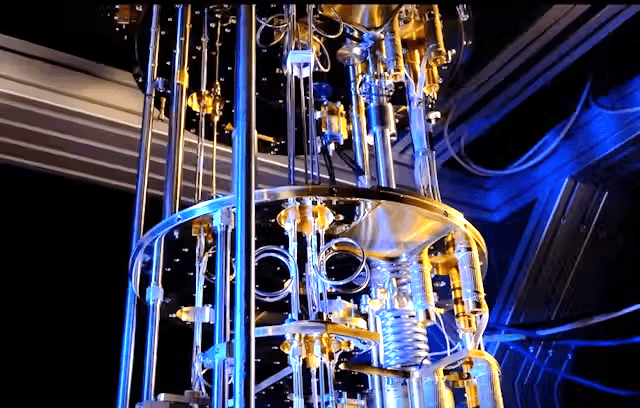
The coldest part of a quantum computer is not there for drama. It is there because heat acts like static on a weak radio station, and qubits already speak in whispers. Cryogenic computing technology keeps quantum processors stable by pulling their working environment down to millikelvin temperatures, where thermal noise drops and quantum states have a better chance to last long enough for useful work. That matters to American labs, chip teams, and buyers watching quantum hardware move from lab tours into serious engineering plans. Coverage from advanced technology publishing networks often focuses on the processor itself, but the refrigerator around it may decide how far the machine can grow. For readers, the practical takeaway is simple: cold is not a side feature. It is the condition that lets the processor act like a quantum device instead of a noisy metal pattern. NIST describes low temperatures as a way to suppress noise and make quantum behavior easier to access, which is the plain heart of the issue.
Why Quantum Processors Need a Colder Kind of Computing
Quantum chips do not behave like laptop chips with a fancy cooling fan. A normal processor can tolerate heat, timing noise, and electrical clutter because its bits sit in firm states: one or zero. Qubits are softer. They can hold richer states, but those states are easy to disturb. So the machine around the chip has to act like a quiet room, a shock absorber, and a freezer at the same time.
That is why a quantum lab can feel less like a computer room and more like an instrument shop. The processor is only one part of a larger measurement system.
Heat Is Not Only a Temperature Problem
At near absolute zero, the goal is not comfort for the hardware. The goal is silence. Heat brings random motion, and random motion makes qubits harder to read and harder to trust. You can think of it like trying to photograph a candle flame during a thunderstorm. The flame is there, but the setting keeps ruining the picture.
This is why superconducting quantum processors sit inside dilution refrigerators instead of ordinary electronics racks. IBM explains that these systems use helium-3 and helium-4 mixtures to reach the millikelvin range, where quantum effects become easier to study and control. That one detail changes the whole design. Every wire, plate, screw, connector, and microwave component becomes part of the thermal plan.
Here is the odd part: colder is not always the full answer. A badly designed cold system can still shake, leak heat through cables, or feed electrical noise into the chip. The win comes from controlled cold, not cold for its own sake.
The Refrigerator Becomes Part of the Computer
A useful quantum machine is not a chip placed inside a box. It is a stack of linked systems. The processor sits at the coldest stage. Control electronics, filters, amplifiers, cables, pumps, and room-temperature instruments all sit at different layers above it. Each layer has to pass signals without dumping too much heat downward.
That creates a strange engineering bargain. More qubits need more control lines, but more lines carry more heat. More shielding protects the chip, but it also takes room. More measurement equipment helps the operator, yet it can add noise if placed poorly. The refrigerator is no longer support gear. It is part of the computing architecture.
You can see the tradeoff in a simple lab change. Add one extra readout chain for a new test chip, and the team may also need another attenuator, more thermal anchoring, more room on a plate, and a new calibration routine. One change near the processor echoes through the whole fridge. That is why experienced teams treat the cold stack like a city map, not a storage shelf.
A small U.S. university lab may run a dilution fridge with a handful of devices inside. A national lab or a major company wants room for many chips, cavities, cables, and test fixtures. The same physics applies, but the scale changes the headache. The future of quantum processors depends less on a single heroic qubit and more on whether the cold platform can host a crowded, wired, measured machine without losing its calm.
Cryogenic Computing Technology Is Becoming a Hardware Race
The race is not only about who makes the best qubit. It is also about who can build the coldest, cleanest, most serviceable hardware stack around that qubit. That should not surprise anyone who has watched data centers evolve. The chip may get the headline, but power delivery, cooling, packaging, and maintenance decide whether the system can run outside a showcase.
Bigger Fridges Are a Sign of Serious Intent
Fermilab’s Colossus project makes the point in a physical way. The lab has described it as a millikelvin dilution refrigerator with 5 cubic meters of space, designed to cool components to around 0.01 K for quantum computing and physics experiments. That is not a desktop upgrade. It is a signal that quantum hardware is becoming facility-scale engineering.
The non-obvious lesson is that larger does not mean less precise. In most household thinking, bigger machines feel rougher and less controlled. In quantum work, a larger cold volume can let engineers spread out components, reduce crowding, and test richer hardware layouts. Space can become a form of precision.
This matters for U.S. research because the path from a neat lab demo to a useful quantum system runs through test capacity. You need room to try packaging ideas, swap materials, compare wiring plans, and run failure analysis. A cramped fridge slows that learning. A larger platform lets the hardware team make mistakes faster and learn from them.
There is also a people problem hidden inside the metal. Graduate students, technicians, vendor field teams, and staff scientists all need access to the same machine. If the cold space is too tight, every change becomes a negotiation. Larger platforms can give teams enough physical room to separate experiments, label lines, and remove hardware without disturbing every neighboring part.
Service Access May Matter as Much as Raw Cold
IBM’s Goldeneye concept points to another practical issue: access. IBM wrote that the cryostat design used a modular frame, a clamshell opening, remote monitoring, and automation ideas aimed at making large cold systems easier to build, open, and operate. That sounds less glamorous than a new processor name. It may matter more on a Tuesday afternoon when a cable fails.
Quantum hardware teams spend a lot of time cooling down, warming up, adjusting, and cooling again. If a system takes too long to open or requires too many people to service, the pace of learning slows. The machine becomes a bottleneck before the algorithm ever runs.
That is why quantum hardware basics should include the cryostat, not treat it as background furniture. A processor with strong lab results can still face a wall if its support system is hard to service, too crowded, or too power-hungry. The cold box is where physics meets shop-floor reality.
The best service design often looks boring from the outside. Hinges, cranes, panels, software dashboards, cable labels, and safe access paths do not feel like science fiction. Yet they decide whether a team loses a day or a month when one connector behaves badly. In a young field, faster repair is faster discovery.
The Hidden Cost Is Heat That Sneaks In Through the Details
Once you understand the cold platform as part of the computer, small parts stop looking small. A cable is no longer a cable. It is a heat path. A connector is not merely a connector. It is a place where signal quality, mechanical fit, and thermal load meet. The problem is less like chilling a drink and more like keeping a snowflake intact while passing instructions to it through a crowded office.
Wires Carry Signals and Trouble
Every quantum processor needs control and readout. For superconducting systems, microwave signals tell qubits what to do and help engineers measure what happened. Those signals move through lines that connect room-temperature equipment to the cold chip. The same line that carries a clean command can also carry heat, noise, or loss.
This is where near absolute zero becomes hard to maintain in practice. A refrigerator can have enough cooling power on paper, then lose the fight because the wiring plan loads one stage too much. Teams have to choose materials, add attenuators, anchor cables at several temperatures, and filter signals so the chip gets instructions without a flood of unwanted energy.
A helpful example is the control rack sitting outside a lab fridge. To a visitor, it looks like a stack of instruments and cables. To the engineer, each cable has a thermal story. Stainless steel may carry less heat than copper, but it has different signal tradeoffs. Superconducting materials help in some places, but not every line can be treated the same way.
The same goes for filters and attenuators. They can clean up a signal, but they also dump heat where they sit. Put them at the wrong stage and the fridge pays the price. Put them in the right place and the qubit sees a calmer command. Small placement choices become system behavior.
Energy Use Starts Before the Chip Turns On
Cooling down a cryogenic system takes time and power before any quantum job begins. NIST researchers found that a common pulse tube refrigerator was efficient near its final 4 K operating point but wasteful during much of the cooldown from room temperature, then showed a way to cut time and energy use by changing how the system was driven. That is a plain reminder that the bill starts early.
The counterintuitive part is that better cold machines may save energy before they reach their coldest state. People often picture efficiency as something that happens during steady operation. In cryogenic labs, the ramp down can be a major part of the cost and schedule. A faster, smarter cooldown can give researchers more days per year to test hardware.
For American companies, that affects planning. A startup paying for lab time cares about how often it can cycle hardware. A national lab cares about how many experiments can share a platform. A university group cares about how many student projects can run before a deadline. Better thermal design is not a footnote. It changes the work calendar.
It also changes risk. A long cooldown can make teams conservative because each failed test costs too much time. Shorter cycles invite bolder hardware trials. That is where efficiency turns into creativity. When the penalty for trying a new package is lower, engineers try more packages.
The Next Breakthrough May Sit Beside the Qubit
Quantum processors will keep getting attention, and they should. But the next hard leap may come from nearby parts: cryogenic control chips, low-noise amplifiers, better interconnects, cleaner materials, and refrigerators that vendors can build and support at higher volume. The processor is the star. The supporting cast decides whether the star can perform more than once.
That support work also changes who can enter the field. A school with one shared fridge has different choices than a company with several test bays. A better cold platform can open more experiment time, lower the fear of failed runs, and give smaller teams a fairer shot at learning.
Cold Electronics Could Shorten the Long Wiring Problem
One reason engineers study cryogenic electronics is distance. If more control and readout work can happen near the processor, fewer signals may need to travel all the way from room temperature. That could reduce cable crowding and noise, though it also adds a new heat source inside the fridge. Nothing is free.
NIST’s work on flux quantum electronics shows why this path attracts attention. The agency describes superconducting digital circuits that operate at 4 K or below, with low power dissipation and clock rates that can reach far beyond ordinary electronics in some test structures. Those circuits are not a magic answer for every quantum computer, but they show how cold control may become part of the stack.
The hard question is placement. Put electronics too warm and you keep the cable burden. Put them too cold and you risk heating the qubits. The sweet spot may sit at an intermediate stage, such as a few kelvin, where electronics can help without crowding the millikelvin plate.
This is a design culture shift. Classical computing often pushed logic closer together to gain speed. Quantum hardware has to ask a colder question: what should live near the qubit, what should stay away, and what belongs between those worlds? The answer may differ by qubit type, lab budget, and control method.
Supply Chains Are Now Part of Quantum Design
The cold hardware race is also a supply-chain race. ULVAC announced work on a next-generation dilution refrigerator for quantum computers with input from IBM, describing support for 10 mK-level operation and a modular design aimed at larger quantum environments. That news is not only about one vendor. It reflects a wider need for more sources of dependable cryogenic gear.
This is where the U.S. audience should pay attention. Quantum progress depends on parts that do not sound flashy: vacuum components, compressors, pulse-tube cryocoolers, seals, thermal links, and measurement tools. When lead times stretch or service support slows, the research slows too.
For readers comparing this field with classical computing, semiconductor cooling guide is a useful mental bridge. Data centers learned that cooling and power are not side issues. Quantum teams are learning their own version of that lesson, but at temperatures where a tiny heat leak can become a full design review.
Buyers should also watch service networks. A vendor that can deliver a cold system but cannot support it fast in the United States may still leave a team exposed. Quantum roadmaps depend on parts, training, and field response. The lab that wins may be the one with fewer heroic rescues.
Conclusion
The smartest way to read this field is to stop separating the quantum chip from its cold surroundings. A processor can have strong qubits, clever gates, and promising roadmaps, yet still run into the plain limits of wiring, heat, access, and service time. Cryogenic computing technology is the discipline that keeps those limits from swallowing the promise. It turns the refrigerator into a computing platform, not an accessory.
For U.S. labs, startups, and hardware buyers, the next few years will reward teams that treat cooling as architecture. The winning systems will not be the ones that only reach the lowest number on a thermometer. They will be the ones that stay quiet, can be opened and repaired, leave room for growth, and make each experiment easier to repeat. That kind of progress will look slow to outsiders, because it is built from plates, pumps, seals, cables, and patient thermal tests. Still, it is the work that makes the larger dream believable. Watch the cold hardware. That is where quantum ambition becomes engineering.
Frequently Asked Questions
Why do quantum processors need to stay near absolute zero?
Heat creates random motion and electrical noise that can disturb fragile qubit states. Superconducting quantum processors need millikelvin conditions so those states last long enough for control and readout. Cold does not solve every error, but it gives the machine a cleaner starting point.
What is a dilution refrigerator in quantum computing?
A dilution refrigerator is a cryogenic machine that uses helium isotope mixtures to reach millikelvin temperatures. It cools the processor through a set of temperature stages. Each stage removes heat while cables and components pass signals down to the chip.
Is near absolute zero the same as absolute zero?
No. Absolute zero is 0 K, a physical limit that cannot be reached. Quantum systems usually operate above it, often in the millikelvin range. That is still colder than outer space and cold enough to reduce many forms of thermal noise.
Why can’t quantum computers use normal computer cooling?
Fans, liquid loops, and data center cooling cannot reach the temperatures needed by superconducting qubits. They manage heat from classical chips, but quantum processors need an environment with far less thermal noise. The cooling method has to match the physics of the qubit.
Does colder always mean better for quantum hardware?
No. A colder number helps only when the full system is well designed. Poor wiring, vibration, bad shielding, or noisy control signals can still damage performance. Engineers care about stable cold, clean signals, and low heat leaks, not temperature alone.
What makes cryogenic wiring so difficult?
Each wire must carry useful signals while limiting heat flow into the coldest stage. More qubits usually mean more lines, filters, and connectors. That creates crowding and heat load, so engineers have to balance signal quality with thermal safety.
Are cryogenic electronics used inside quantum computers?
Some systems place electronics at cold stages to reduce wiring distance and improve signal handling. The challenge is heat. Electronics near the qubits can help control the system, but they must not warm the coldest plate or add noise.
Will better cryogenic systems make quantum computers practical sooner?
They can speed progress by improving test capacity, uptime, wiring layouts, and energy use. Better cooling will not replace error correction or better qubits. It will make serious hardware development easier, which is often what turns a lab result into a working system.