
People do not fall in love with new media because the file format changed. Volumetric video capture matters because it gives recorded people, places, and performances a sense of physical presence, not a fixed rectangle on a wall. Instead of watching a scene from one chosen angle, you can move around it, study it, and feel closer to the moment. That changes the job of video from showing an image to holding a space. For American creators, studios, sports teams, educators, and brand teams, the promise is tempting but also expensive. The smartest path is not to treat this as a fancy camera trick. It should be treated as a new production language, one that sits between cinema, gaming, live events, and spatial computing content. That is why early coverage, partner outreach, and technology media distribution matter for teams trying to explain the shift without making it sound like another headset fad. The uploaded brief frames the article around this exact move beyond flat screens. The search intent is practical: people want to know what the technology does, where it fits, and whether it is close enough to matter now.
Why Volumetric Video Capture Feels Different From Normal Video
Flat video asks the viewer to accept one frame, one distance, and one editorial choice. Spatial media asks a different question: what happens when the viewer’s position becomes part of the story? That shift sounds small until you see it in a sports replay, a training lesson, or a concert clip where the subject no longer feels trapped behind glass.
The better way to think about it is not “video with depth.” It is recorded space with time inside it. A normal clip tells you what happened from the spot where the camera stood. A spatial scene lets you read the moment from the spot where your attention goes. That difference will decide which projects deserve the added cost.
The camera stops being a single eye
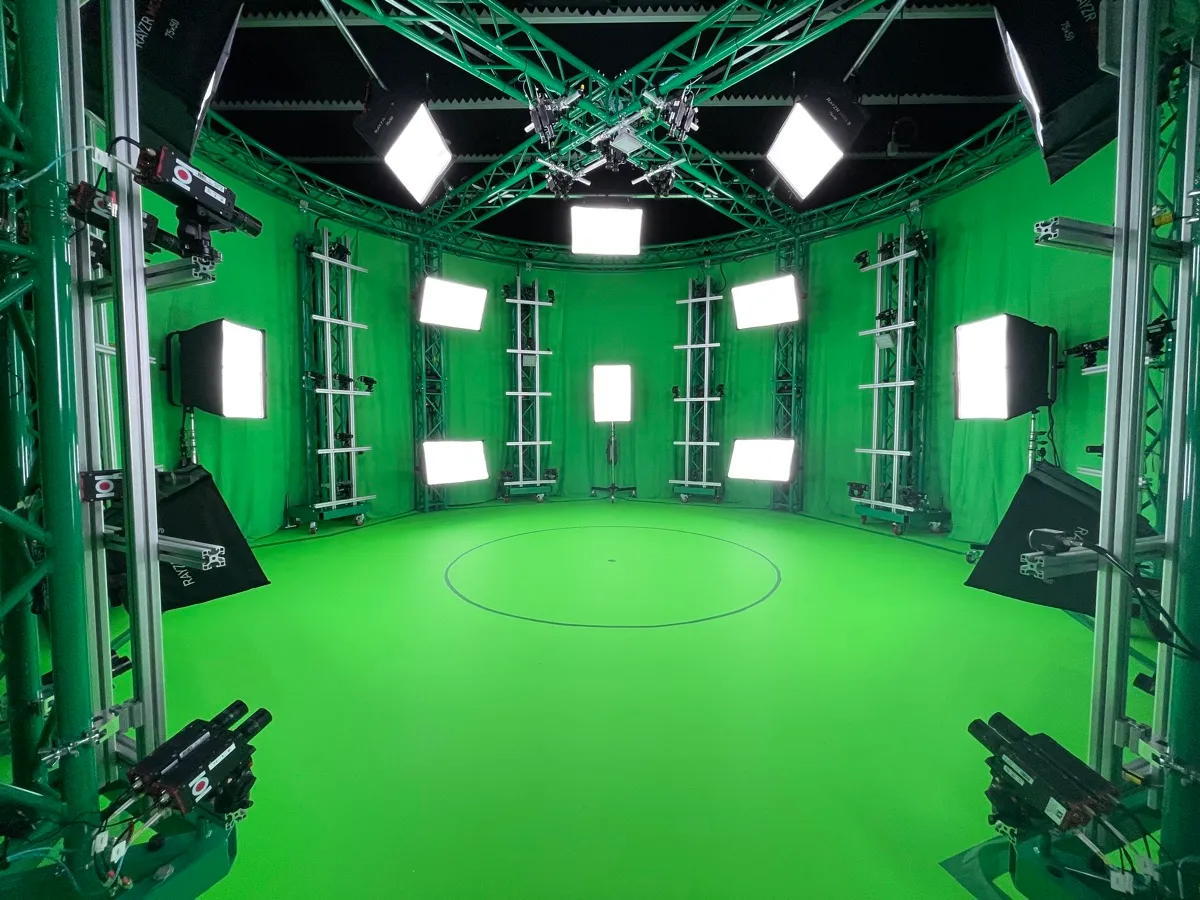
A normal camera chooses for you. It says, “Stand here. Look here. Trust this angle.” A spatial capture rig does the opposite. It records a performer or object from many directions, then rebuilds the subject as a 3D asset that can be viewed from different positions. Research surveys describe this kind of media as built around six degrees of freedom, meaning the viewer can shift viewpoint instead of staying locked to one shot.
That changes the emotional weight of a scene. A dancer does not only move across a screen. The dancer can occupy space in front of you. A product demo does not need ten cutaway shots. You can circle the object and notice the hinge, texture, or scale on your own. The odd part is that this makes the producer give up a little control. Better media sometimes means letting the viewer look away.
That loss of control scares traditional directors, and for good reason. Framing is one of the oldest tools in visual storytelling. Yet spatial capture does not remove direction; it moves direction into the set, the blocking, the lighting, and the user path. The creator still guides attention. The guide is quieter.
Presence beats resolution when the moment needs depth
The old race was about sharper pixels. Then came brighter screens, wider color, and smoother motion. Those things still matter, but they do not solve the deeper problem: flat video can show shape, yet it rarely lets you feel shape. A 4K clip of a basketball move looks clean. A spatial replay can show the defender’s position, the shooter’s footwork, and the passing lane as a single living event.
That is why immersive media experiences have early pull in sports, live performance, and training. The value is not only beauty. It is clarity. A football coach could review spacing from a new angle. A medical instructor could show hand position without asking students to guess from a cropped shot. A museum could let a visitor inspect a fragile artifact without touching it. The counterintuitive lesson is simple: the best upgrade may not look more polished at first. It may feel more understandable.
This is also why the flat-screen comparison can mislead buyers. A spatial asset judged on a laptop may seem less dramatic than the sales pitch. Put the same asset inside an AR view, a headset, or a guided training module, and the value appears. The format needs context. A hammer looks dull until there is a nail.
Where The Technology Is Already Finding Real American Uses
The first wave of spatial media is not replacing Hollywood movies or YouTube tutorials overnight. It is finding jobs where flat video already leaves money or meaning on the table. In the United States, that points toward sports venues, college training programs, brand activations, defense-style simulation, remote events, and medical education.
The pattern is not random. Adoption begins where a second angle has clear value. If one view is enough, normal video wins. If the missing angle changes the decision, the deeper format has a case.
Sports replays show the business case first
Sports may become the cleanest test because fans already understand replay. They do not need a lecture on 3D reconstruction. They want to know whether the receiver stayed in bounds, whether the runner found the gap, or how a defender lost half a step. Coverage of recent live-event work has pointed to volumetric workflows as useful for large sports moments because they let producers reposition views after capture, even when the final clip still airs as a 2D replay.
That last detail matters. The near-term win may not be a headset at every seat in an NFL stadium. It may be a better replay on the same living room TV. A producer can swing around a play, freeze the space, and help the audience read the action. The viewer gets something richer without changing habits. That is how new media sneaks into normal life.
A college basketball program gives a clean example. Coaches already break down film, but a sideline angle can hide the real mistake. Was the screen late, or was the guard too wide? A spatial replay can show the geometry of the play instead of forcing staff to infer it. That does not make the coach less skilled. It gives skill better evidence.
Training and education need proof, not spectacle
A high school biology class in Ohio does not need a futuristic showpiece. It needs students to understand what they missed the first time. A nursing program in Texas does not need a floating doctor for novelty. It needs repeatable lessons where hand position, patient distance, and body angle are visible from more than one side.
This is where 3D video production starts to feel practical. A captured instructor can become a repeatable spatial lesson. A warehouse safety session can show how close a forklift came to a blind corner. A construction training module can teach ladder placement with the kind of depth that a flat safety video often loses. The surprise is that spatial media may help dull subjects before it helps glamorous ones. Boring training has the clearest pain. People tune out, miss details, and then make costly mistakes.
The same logic applies to retail, but only when depth affects trust. A handbag, a camping tent, a chair, or a piece of fitness gear can gain from spatial viewing because buyers care about scale and surfaces. A flat photo can flatter. A spatial asset has less room to hide. That honesty may become a selling point for brands willing to let customers inspect the product from more than the hero angle.
The Hard Parts Behind The Magic
The public sees the floating person or interactive replay. Production teams see the bill, the calibration problems, the processing time, and the delivery mess. Spatial capture is exciting because it expands what video can do. It is difficult because it asks camera, software, network, and display systems to behave like one machine.
That is the gap many early pitches skip. The audience sees wonder. The crew sees a chain where one weak link can ruin the output. A mismatched camera, a shiny jacket, a late render, or a player that fails on a target device can turn an expensive shoot into a file no one wants to publish.
Capture rigs still demand space, skill, and patience
A strong spatial shoot is not a casual phone clip. It often needs multiple cameras, matched lighting, careful timing, and a stage that keeps shadows, reflective surfaces, and wardrobe problems under control. Microsoft’s early mixed reality capture work, for example, grew from a Redmond studio effort that began in 2010, and partner setups such as Dimension have used large multi-camera stages to record performers from many angles.
That kind of setup changes the mood on set. The performer cannot hide a bad angle behind a director’s favorite lens. Wardrobe may need to avoid patterns that confuse reconstruction. Hair, fingers, props, and quick motion can turn into messy edges. A small team making spatial computing content has to think like a film crew and a data team at the same time. It is not enough to capture a person. You have to capture a person that software can rebuild.
The hidden labor sits after the shoot. Teams must clean data, check alignment, test playback, trim file size, and make sure the subject still feels alive once reconstructed. A singer’s hand gesture may look perfect in normal footage but shimmer in a spatial model. That is not a tiny detail. When the promise is presence, small visual errors feel personal.
Delivery is the quiet bottleneck
A beautiful spatial recording can fail if it is too heavy to move, too slow to render, or too awkward to play. That is the part casual demos often hide. To make spatial video feel natural, the system must manage geometry, texture, depth, compression, and viewer motion without making the experience lag or break. ISO’s visual volumetric media work describes how coding, decoding, and reconstruction need formal methods so these files can be stored and delivered more predictably. The ISO/IEC 23090-5 standard is one sign that the field is moving from lab demos toward shared production rules.
The non-obvious point is that compression may shape the art. If a format makes fast movement expensive, directors will choose calmer motion. If hair or smoke breaks clean playback, stylists and production designers will adjust. Every medium has limits. Silent film had them. Early streaming had them. Spatial capture will have them too, and the best creators will turn those limits into style.
Recent research is pushing toward larger interaction spaces, stronger audio-visual capture, and high-frame-rate dynamic scenes, which shows where the next pressure point sits: not making one impressive clip, but making captured spaces feel stable as viewers move. That is a harder problem than making a shiny demo for a conference booth. It means the experience must hold up when the viewer behaves like a person, not a lab tester.
What Comes Next For Screens, Headsets, And Everyday Content
The future is unlikely to be one grand switch from flat video to spatial media. American households do not replace habits that quickly. The more likely path is mixed: flat screens borrow spatial tools, headsets receive richer scenes, phones become casual viewers, and creators pick the format based on the job.
That mixed path may be healthier than a sudden replacement story. When a format grows beside normal video, creators can test it where it belongs. They do not have to force every interview, recipe, or news clip into a spatial shell. Restraint will save money and protect trust.
Phones may matter more than headsets
Many people assume spatial media rises or falls with VR headsets. That is too narrow. If a viewer can open a product, athlete, or instructor on a phone and move around it with touch, the market becomes less dependent on a headset purchase. PlayCanvas, for instance, has supported Microsoft volumetric playback across desktop, mobile AR, and WebXR-enabled VR through a single web link, showing how access can spread beyond one device class.
This matters for brands and publishers. A furniture company does not want a showroom asset that only works for the small share of customers with a headset nearby. A sneaker launch needs fast access. A local news outlet covering a major art installation wants people to tap and explore without installing a heavy app. Spatial media becomes more believable when it rides on habits people already have.
There is a useful warning here. Phone viewing will not deliver the full sense of scale that a headset can. It can still create the first habit. Short clips, web-based AR, and interactive product views may train audiences to expect more control. After that, headsets do not have to introduce the idea from zero.
Creators will need a new sense of blocking
Flat video has a grammar. Close-up, wide shot, pan, cut, over-the-shoulder. Spatial media has a different grammar, and it is still being written. You have to ask where the viewer might stand, what they might notice first, and how the scene holds attention when there is no single frame doing all the work.
That changes 3D video production at the planning stage. A musician standing still in the center of a stage may look less alive than expected. A chef turning slightly while explaining knife position may work better because the motion rewards exploration. A car interior tour may need fewer dramatic edits and more careful spatial cues. For future digital content formats, the winner will not be the team with the largest rig. It will be the team that knows when depth adds meaning and when it becomes clutter.
This is where immersive media experiences need editorial taste. Too much freedom can become work for the viewer. A good scene gives choice, but it also gives hints: a sound cue, a hand movement, a clear object, a reason to step closer. The medium may be spatial, but attention is still human. People need an invitation, not a maze.
Conclusion
The flat screen is not going away, and that is fine. Most stories still work inside a rectangle because rectangles are cheap, familiar, and easy to share. The mistake is thinking every recorded moment should stay there forever. Some moments ask for distance, scale, and choice. A contested catch, a museum object, a surgical lesson, a live actor speaking toward you. Those are not better served by another layer of polish.
Volumetric video capture is moving into the space where media stops acting like a window and starts acting like a place. The next few years will reward patient builders more than loud promoters. They will need better standards, lighter files, cleaner playback, and creators who respect what viewers do when they can choose their own angle. For a deeper look at how immersive tools fit broader publishing plans, connect this topic with your immersive technology trend guide. The future belongs to teams that treat spatial media as a craft, not a stunt.
Frequently Asked Questions
How does volumetric recording differ from normal 3D video?
Normal 3D video usually adds depth from a fixed viewpoint. Spatial recording rebuilds the subject or scene so viewers can shift position. That makes it better for training, sports review, product demos, and other cases where angle and distance affect understanding.
Is spatial video only useful with VR headsets?
No. Headsets can make the experience stronger, but phones, tablets, browsers, and AR tools also matter. The wider opportunity comes when people can open spatial content through devices they already own, without learning a new viewing habit first.
What industries in the USA could adopt this first?
Sports, medical education, retail, military-style training, live entertainment, museums, and corporate learning are strong early fits. These fields often need depth, repeatability, or close inspection. That makes the added production cost easier to defend.
Why is immersive media expensive to produce?
It often needs many cameras, careful lighting, clean staging, heavy processing, and skilled technical staff. The cost is not only the shoot. Teams also pay for reconstruction, file handling, playback testing, and device support across different viewing systems.
Can small creators make spatial content yet?
Some can, especially with phone-based depth tools and lighter 3D workflows. Full performer capture still remains harder. Small creators should start with objects, short demos, or simple scenes before planning a full spatial performance or branded experience.
What makes sports replays a strong match for this format?
Sports already depend on angle, timing, and spatial judgment. A replay that can move around a play helps viewers understand spacing and movement. It also gives broadcasters new ways to explain moments without asking fans to change how they watch.
Will this replace traditional video production?
No. Traditional video will stay dominant because it is fast, familiar, and easy to publish. Spatial capture will grow beside it, serving moments where depth improves the message. The real skill will be choosing the right format for each story.
What should brands test before investing heavily?
Start with one use case where depth solves a clear problem. A product walkthrough, training scene, or event highlight is safer than a large campaign. Measure whether viewers understand more, stay longer, or take action more often after exploring the scene.